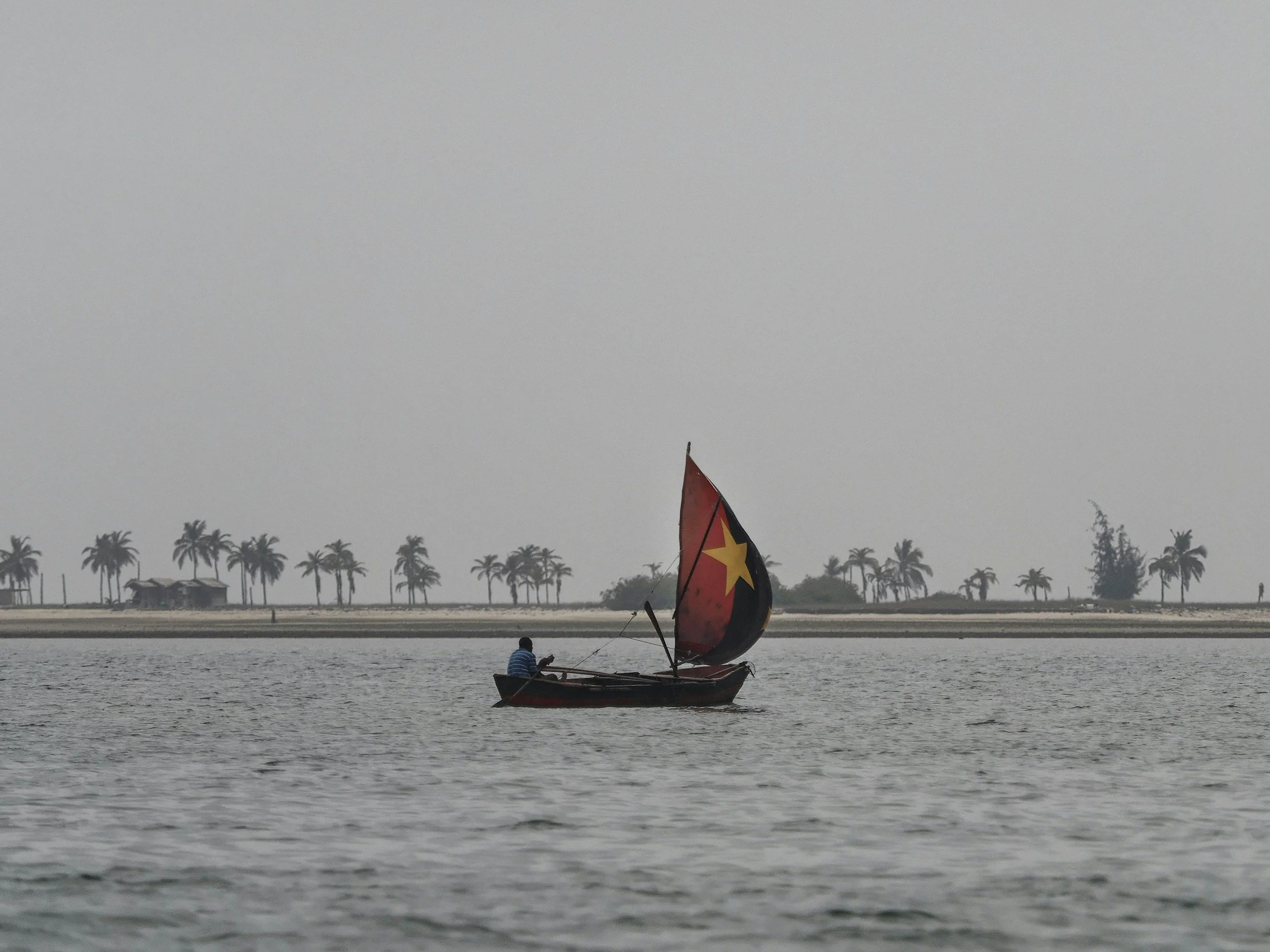
ANGOLA
The Angolan horse and its relationship with male initiation rites
The relationship between horses and male initiation ceremonies in Angola requires careful historical investigation. While horses have played a documented role in Angolan military history, pastoral societies and colonial transport systems, the available academic literature does not currently establish a general or nationally recognised tradition in which horses form an essential part of male initiation rites.
Angola contains a wide range of cultural and linguistic communities, including the Ovimbundu, Chokwe, Mbundu, Herero and Ovambo-related populations. Their initiation practices differ considerably and should not be treated as a single cultural system.
A useful historical source is John T. Tucker's study, Initiation Ceremonies for Luimbi Boys, published in the journal Africa. It documents male initiation among the Luimbi people of the Bié highlands. The ceremony included dancing, ritual meals and activities conducted within the cattle enclosure. The account provides evidence of the importance of livestock and communal ritual, but does not establish a central role for horses.
Other historical research demonstrates that horses were present in Angola from the early colonial period. The Portuguese colonial administration imported horses from Brazil and other Atlantic trading centres to support military operations. Mounted troops were used in warfare, patrols and the maintenance of colonial authority.
The distinction between these two histories is important. The presence of horses within a society does not automatically establish their ritual use in initiation ceremonies.
It is possible that particular local traditions have involved horses as symbols of prestige, masculinity or social achievement, but these require identification through ethnographic research and community testimony. Such accounts should be documented at the level of the specific community rather than generalised to Angola as a whole.
For FARAS, this is an opportunity to investigate a potentially under-documented relationship between equestrianism, initiation and masculine identity. The most valuable next step would be to identify the particular Angolan community and initiation practice to which the original reference relates, then consult local historians, cultural custodians and ethnographers.
Until such evidence is obtained, it would be academically inappropriate to claim that the Angolan horse is traditionally used in male initiation rites.
Principal sources
John T. Tucker, Initiation Ceremonies for Luimbi Boys, Africa, Cambridge University Press.
Cambridge Core
The Supply and Deployment of Horses in Angolan Warfare (17th and 18th Centuries), historical research chapter.
ISPTundavala
V. Sousa Dias (1954), Notes on the Livestock of Angola.
EurekaMag
The Angolan horses
Unlike Ethiopia or Lesotho, Angola does not currently have a widely recognised indigenous horse breed with an established international breed standard and comprehensive population register. Its equine history is instead characterised by successive introductions of horses through Portuguese colonial trade, military activity and regional movement across southern Africa.
Horses were present in Angola from the early colonial period. During the seventeenth and eighteenth centuries, the Portuguese administration imported horses from Brazil to strengthen its military forces. Historical research on Angolan warfare demonstrates that mounted troops were an important component of colonial military organisation.
The supply of horses was closely linked to Atlantic shipping networks. Ships travelling between Brazil and Luanda sometimes received preferential licences to transport horses, while government-sponsored expeditions were organised to acquire animals for military campaigns. Cavalry was used for patrols, battlefield mobility and the control of territory.
A 1954 livestock survey by V. Sousa Dias provides an interesting snapshot of Angola's horse population during the colonial period. It records that relatively few horses were bred in the territory, with most concentrated in the Cuanhama district in the south. The animals were reportedly descended from Cape Verde horses and horses from South-West Africa, some of which carried Thoroughbred blood.
This distribution is significant because it suggests historical connections between Angolan equine populations and neighbouring southern African horse-breeding regions.
The Cuanhama region is particularly relevant. Its proximity to Namibia and the wider Ovambo cultural area created opportunities for the movement of horses across borders. However, the precise genetic contribution of individual imported populations remains insufficiently documented.
Modern national statistics are difficult to interpret. International livestock databases do not consistently provide detailed breed-level information for Angola's horses. A current, verified national horse census and a recognised Angolan breed register were not identified in the research reviewed for this article.
Angola's equine history remains an interesting research subject because it connects Portuguese colonial military systems, Atlantic trade and regional southern African horse movements. Further work should investigate contemporary horse ownership in the southern provinces, particularly the relationship between historical Cuanhama populations and horses.
The Kwanhama Horse of Southern Angola
The Kwanhama horse, also referred to as the Kwanyama or Cuanhama horse, is an indigenous horse population associated with the Kwanhama people of southern Angola, particularly Cunene Province. The population is of particular interest because it represents a locally maintained equine heritage that has received comparatively little formal scientific documentation.
Research presented at the 2017 International Society for Animal Genetics conference examined the genetic characteristics of Cuanhama horses using 25 microsatellite markers. The researchers identified significant genetic differentiation between the sampled horses and nine comparison breeds. Their analysis also indicated genetic affinities with horse populations in Brazil and Uruguay. The authors proposed that these relationships might reflect historical movements of horses connected to the transatlantic slave trade. This is an important hypothesis, but it should not be treated as a conclusively established account of the breed's origins. Further population-level research is required to clarify its ancestry and historical development.
The Kwanhama horse also retains cultural significance within the communities associated with it. A 2024 report by Ver Angola, based on information from the Angolan news agency ANGOP, documented the presence of horses in male initiation ceremonies among the Kwanhama. This provides an important example of the horse's role extending beyond transport and agricultural work into social and ceremonial life.
Conservation has become an increasingly important concern. The Instituto Superior Politécnico Tundavala in Angola has undertaken work towards documenting and preserving the population. In 2024, the institution reported maintaining a group of more than twenty horses and seeking support for genetic sampling and further characterisation. The report identified recurring drought and the declining use of horses in favour of donkeys as factors affecting the population.
The Kwanhama horse should therefore be understood as an important component of Angola's living equestrian heritage. Although its formal breed classification and population status require further verification, its genetic distinctiveness, cultural associations and conservation needs make it a significant subject for further research.
Principal sources
V. Sousa Dias (1954), Notes on the Livestock of Angola.
EurekaMag
The Supply and Deployment of Horses in Angolan Warfare (17th and 18th Centuries).
ISPTundavala
FAO, domestic animal genetic resource documentation and country reporting.
International Society for Animal Genetics, 2017. “Cuanhama horses from Angola as a possible expression of centuries of slave trade.” Conference research abstract.
Ver Angola / ANGOP, March 2024. Report on the conservation and scientific characterisation of the Kwanhama horse by Instituto Superior Politécnico Tundavala.
Voices of Discerning Patrons

We witnessed efficiency that never compromised artistry, a rare and welcome union.
Recent Client
Their refined guidance turned a complex vision into a seamless reality.
Recent Client
A discerning eye will appreciate the gentle mastery woven into each interaction.
Recent Client