SOUTH AFRICA
The Nooitgedacht horse: history, genetics, characteristics and uses
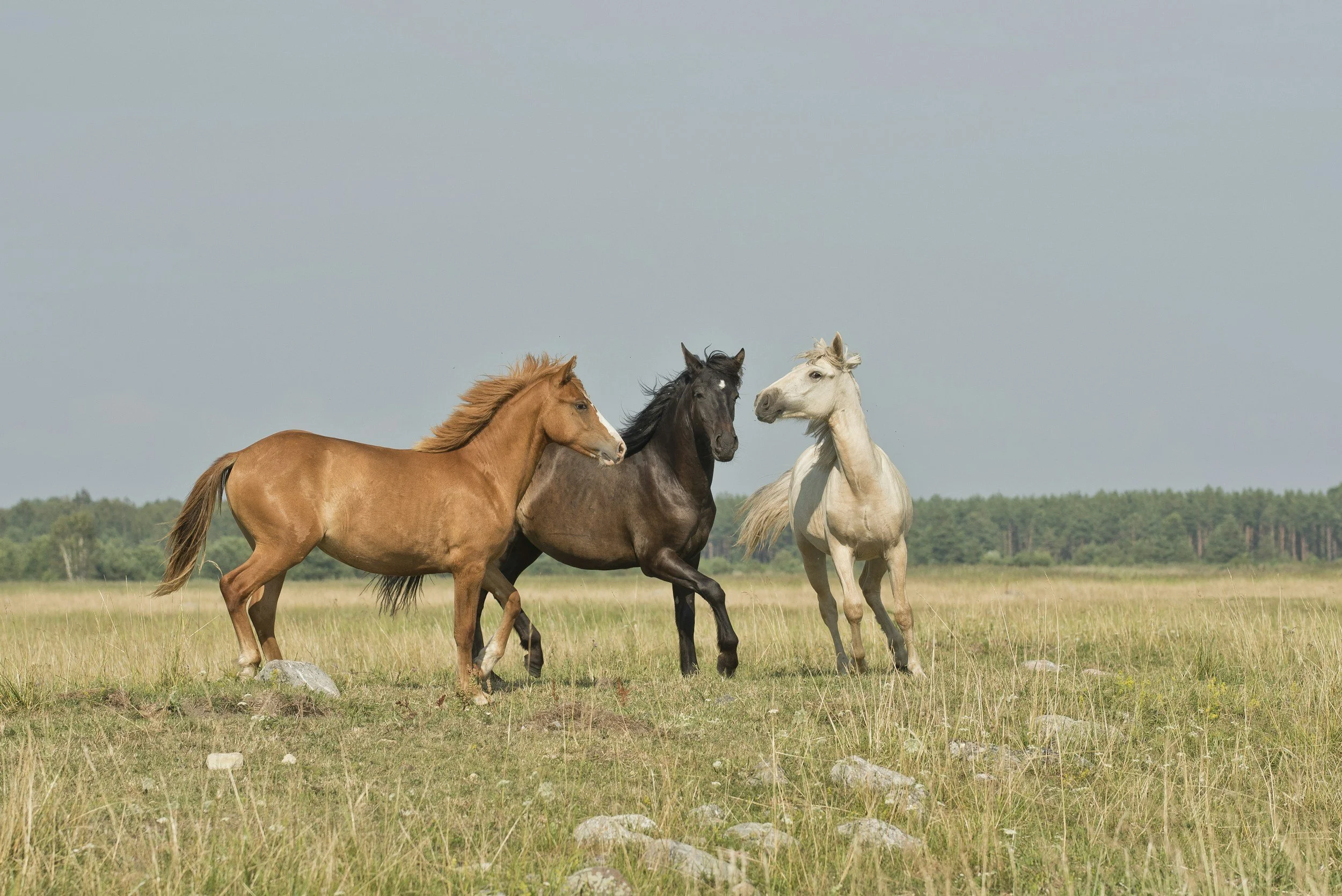
The Nooitgedacht is a South African-developed horse breed established through a government breeding programme during the mid-twentieth century. Its creation was closely connected to concerns about the declining numbers of indigenous southern African horses, particularly the Basotho Pony, which had been heavily depleted during the Anglo-Boer War.
The origins of the breed can be traced to a 1946 memorandum by agricultural official A.W. Lategan, who warned that several indigenous livestock populations were at risk of disappearing. Following this initiative, the Department of Agriculture established a breeding programme at the Nooitgedacht experimental farm near Ermelo in what was then the Transvaal.
In December 1951, a committee involving Professor F.N. Bonsma, Lategan and Professor Bisschop arranged the acquisition of Basotho breeding stock. The initial purchase comprised at least two stallions and six mares. The objective was to preserve the useful characteristics of the Basotho Pony while developing a horse suitable for South African conditions.
The breeding programme subsequently introduced selected Arabian and part-Arabian blood, together with Boerperd influences. The foundation stallion Vonk is identified in later breed literature as an important ancestor of the modern population. Another particularly influential animal was Mac, born in 1958, whose conformation became an important reference for the breed's development.
The Nooitgedacht is a compact but athletic riding horse, generally standing between approximately 138 and 163 centimetres. Its characteristic features include a short, muscular back, sloping shoulders, strong limbs and hard hooves. The breed standard emphasises endurance, soundness, temperament and rideability rather than exaggerated movement or purely aesthetic characteristics.
Genetic research has demonstrated relationships between the Nooitgedacht, Basotho Pony and Boerperd, reflecting their shared Cape Horse ancestry. Research into the DMRT3 gene has also identified a mutation associated with alternative gaits in a small sample of Nooitgedacht horses. This finding is interesting but does not establish that the entire breed is naturally gaited.
The breed is valued for its adaptability, intelligence and generally steady temperament. Its uses include recreational riding, showjumping, polo, gymkhana, trail riding and certain working applications.
Despite its importance, the Nooitgedacht remains rare. A recent specialist breed review reports approximately 400 registered animals, although this should be treated as a published estimate rather than a current national census.
The breed represents an important conservation achievement, preserving a distinctive southern African equine lineage while developing a horse suited to contemporary riding.
Principal sources
FAO, Animal Genetic Resources Information Bulletin 32: Southern African Horse Breeds.
32
FEI (2022), Breed Profile: Nooitgedacht Horse of South Africa.
African Horse Genetic Resources and Breeding Strategies for African Input Systems (2025).
Springer Nature Link
Cothran & van Dyk, Genetic Analysis of Three South African Horse Breeds.
JSAVA
The Boerperd: history, development and military significance
The South African Boerperd is a historically important indigenous horse whose development is closely connected to the Cape Horse and the agricultural and military history of southern Africa. Its ancestry reflects several centuries of horse importation, breeding and selection under local conditions.
The first horses arrived at the Cape in the seventeenth century following the establishment of the Dutch settlement in 1652. Early imports included horses from Java, with additional animals subsequently arriving from Persia, Europe and the Americas. These populations gradually contributed to the development of the Cape Horse, a versatile riding and working animal that became important throughout the Cape Colony.
During the eighteenth and nineteenth centuries, the Cape Horse acquired a reputation for endurance, intelligence and soundness. Its descendants became particularly valuable to farmers, traders and mounted commandos operating across the interior.
The development of the Boerperd involved further crossbreeding. Historical records identify influences from Flemish horses, Hackneys, Norfolk Trotters and Cleveland Bays, alongside the earlier Cape Horse ancestry. The result was a more substantial riding horse capable of carrying riders over considerable distances.
The Anglo-Boer War of 1899–1902 was a defining period in the breed's history. Mounted Boer commandos relied heavily on horses for mobility, reconnaissance, rapid deployment and guerrilla warfare. Their ability to travel long distances and operate across difficult terrain was an important component of Boer military strategy.
British military operations also created enormous demand for horses. The war caused extensive equine mortality, through combat, disease, inadequate nutrition and exhaustion. Thousands of horses were lost, while large numbers of surviving animals were dispersed or absorbed into other breeding populations.
The war consequently contributed to the decline of several indigenous southern African horse populations. The surviving animals formed part of the foundation for subsequent conservation and breeding efforts.
The formal conservation of the modern South African Boerperd developed during the twentieth century. The Boerperd Society of South Africa was established in 1973, followed by the development of a formal breed standard and studbook arrangements.
The modern Boerperd is recognised for its strength, stamina, intelligence and versatility. It is used in riding, showing, endurance and working environments. Its physical characteristics reflect its historical development as a practical riding horse rather than a specialised racing breed.
Genetic studies have demonstrated its relationship with the Basotho Pony and Nooitgedacht, although differences in breeding history have produced distinct modern populations.
The Boerperd remains an important example of South Africa's equine heritage, linking colonial-era horse breeding with the country's agricultural and military history.
Principal sources
Sandra Swart (2010), Riding High: Horses, Humans and History in South Africa.
Stellenbosch University
Van der Merwe & Martin (2011), Four Southern African Horse Breeds, Animal Genetic Resources.
Cambridge Core
South African Boerperd, Population Report 2018.
P R SA B
African Horse Genetic Resources and Breeding Strategies for African Input Systems (2025).
Springer Nature Link
Equestrian culture in South Africa: Enos Mafokate and the democratisation of riding
South African township equestrian culture is an important but frequently overlooked part of the country's horse history. It encompasses both working horses used for transport and informal economic activity, and the development of recreational and competitive riding opportunities in communities historically excluded from organised equestrian sport.
During apartheid, access to formal riding schools, competition facilities and horse ownership was heavily shaped by racial and economic inequality. Equestrian sport was largely concentrated within wealthy white communities, while Black South Africans frequently encountered horses through employment as grooms, stable workers and working-horse owners.
Enos Mafokate became one of the most significant figures in challenging this exclusion. Born in Alexandra, Johannesburg, in 1944, Mafokate developed an interest in horses as a child. His early experiences included riding donkeys and, after an accident, working with horses at local stables.
He initially entered the equestrian world through employment as a groom. His riding ability subsequently developed into a competitive career, and he became South Africa's first Black showjumper after he was noticed by international equestrian David Broom and invited to compete in the United Kingdom.. His achievements included competing internationally at Wembley in 1980 and participating in South Africa's equestrian representation at the 1992 Barcelona Olympic Games, according to the Department of Sport, Arts and Culture.
His contribution extended so very far beyond competitive riding. He was utterly committed to providing opportunities for young people in Soweto to learn horsemanship. The Soweto Equestrian Centre, established by Mr Mafokate in 2006, has developed into a non-profit riding facility offering instruction, horse care and opportunities for children from disadvantaged backgrounds.
The centre also became involved in improving the welfare of working horses. This is an important aspect of Mr Mafokate's legacy because township horse culture cannot be understood solely through the lens of sport. Working horses remain part of the informal economy, providing income through transport, recycling and the movement of goods.
The centre's educational activities helped create a bridge between these working traditions and formal equestrian disciplines, including showjumping and vaulting.
Other organisations and initiatives, including U-Turn Ranch and Askhabe, should be mentioned as part of a broader history of community-based equestrian development.
Mr Mafokate died on 3 September 2026. His legacy is particularly significant. He helped change the face of equestrianism in South Africa and he has improved the lives of countless children and horses.
His work demonstrates how horses can provide opportunities for education, social mobility, community participation and cultural inclusion. To support the foundation click here : https://sowetoequestrian.co.za/
Principal sources
South African Department of Sport, Arts and Culture (4 September 2026), Minister McKenzie and Deputy Minister Mabe Mourn the Passing of Enos Mafokate.
Department Sport, Arts and Culture
FEI (2017), Black Magic: Enos Mafokate.
City of Johannesburg (2023), Time Travel with Enos Mafokate, SA's First Black Show Jumper.
City of Johannesburg
Soweto Equestrian Centre, About Us.
About Us
Mail & Guardian (1994), Riding Off Into The Soweto Sunset.
Mail & Guardian
Cart horses in South Africa: history, livelihoods and welfare
Working horses have played an important role in South African urban and rural economies, particularly before the widespread adoption of motorised transport. Their use continues in certain communities, where horses and carts remain a source of income and provide practical services that are often overlooked in discussions of the country's modern transport economy.
In Cape Town, the carting industry has historical roots in District Six during the early twentieth century. Horses were used to transport fish, fruit, vegetables and other goods to markets, while also collecting bottles and scrap for resale. These activities supported small-scale traders and provided employment for horse owners and drivers.
The forced removal of more than 55,000 people from District Six during the apartheid period fundamentally changed this system. Following relocation to the Cape Flats, former traders lost access to established markets and commercial networks. Many adapted their businesses towards scrap-metal collection and recycling, which required longer journeys and different working patterns.
This history is documented by de Klerk, Quan and Grewar in their 2020 study, Socio-economic Impacts of Working Horses in Urban and Peri-urban Areas of the Cape Flats, South Africa.
The study identified more than 250 working cart horses in the Cape Flats at the time of research. Its survey included 100 participants using 163 horses. Approximately 89% of respondents identified cart-horse income as their primary source of income, while the households supported by these activities extended well beyond the immediate owners and drivers.
Cart horses are used for collecting scrap metal, transporting garden refuse, moving goods and providing informal transport. Their economic contribution must be considered alongside the welfare challenges associated with their working conditions.
Potential problems include inadequate nutrition, dehydration, overloading, poor harness fit, hoof problems, untreated injuries and road-traffic exposure. These risks are affected by working hours, access to veterinary care and the availability of suitable stabling.
The Cart Horse Protection Association has played an important role in providing veterinary and welfare services in the Western Cape. Its work includes owner education, outreach and efforts to improve the conditions under which working horses operate. They can be supported here : https://carthorse.org.za/
The important distinction is between protecting horses from exploitation and dismissing the economic realities of the people who depend on them. Effective welfare interventions need to consider both.
The Cape Flats research provides a particularly valuable evidence base, but its figures should not be interpreted as a current national total. To my knowledge there is no comprehensive, verified national census of working cart horses that would justify extrapolating the Cape Flats estimate to the entire country.
The future of South Africa's working horses therefore requires better population monitoring, accessible veterinary services and policies that recognise the livelihoods supported by the informal carting economy.
Principal sources
de Klerk, Quan & Grewar (2020), Socio-economic Impacts of Working Horses in Urban and Peri-urban Areas of the Cape Flats, South Africa, Journal of the South African Veterinary Association.
UP Repository+2
Cart Horse Protection Association, About Us and History.
Cart Horse Protection Association+1
Surveillant Assemblages in the Urban Informal Economy: A Case Study of Carthorse Operators in Cape Town (2025).
Springer Nature Link