Ethiopia: The Abyssinian Horse
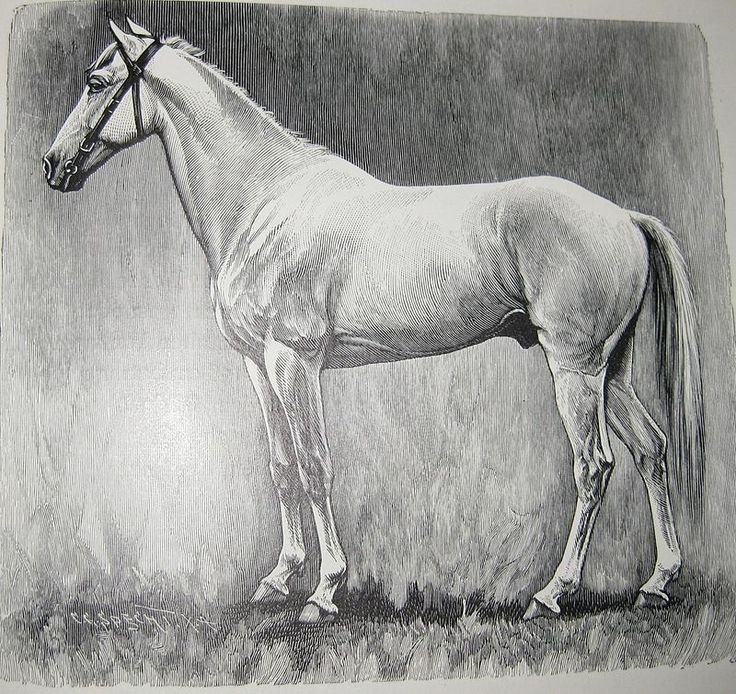
1909SourceC. G. Wrangel (*4 April 1839, ✝ 4 Oktober 1908), Die Rassen des Pferdes, 2 Bände, Stuttgart 1909, Verlag von Schickhardt & Ebner, Band 1 Seite 73
In the northern highlands of Ethiopia, where the land rises into mountains and the roads disappear into steep country, lives one of Africa's oldest and least understood horse populations: the Abyssinian horse.
The name itself belongs to another era. "Abyssinian" is the historical European name for Ethiopia, and the horse was named for the country in which European travellers encountered it. It is not, however, a single horse in the way that the name might suggest. Ethiopia possesses several distinct indigenous horse populations, and for centuries foreign observers frequently described Ethiopian horses collectively as "Abyssinian." Modern research has begun to separate these populations, revealing a much more complex equine landscape.
The Abyssinian horse is principally associated with northern and north-central Ethiopia, particularly the mountainous country around the Semien Mountains and Gondar in the Amhara region. Here, horses have long been part of a highland agricultural world in which movement, cultivation and the carrying of goods are inseparable from the animal itself. A major morphological study of Ethiopian horses identified the Abyssinian as a distinct population, alongside the Bale, Borana, Horro, Kafa, Kundido, Ogaden/Wilwal and Selale horses.
Physically, the Abyssinian is not the polished, symmetrical horse that European ideas of the "ideal" riding horse might lead one to expect. It is relatively small, (DAD-IS records average heights of approximately 1.25 metres for mares and 1.29 metres for stallions) and its conformation can appear irregular, with a deep back and, in many individuals, a pronounced belly. Yet these characteristics need to be understood in relation to the work the horse performs rather than judged against an imported aesthetic of conformation.
These are working horses.
The Abyssinian has traditionally been used for ploughing, hauling and carrying loads, providing an important source of animal traction in its native region. Its relatively small stature is deceptive. In the mountainous terrain of northern Ethiopia, an animal does not need to be large to be powerful. What matters is its ability to work, endure and negotiate difficult ground. The horse's value lies not in the refinement of its proportions but in its capacity to remain useful under demanding conditions.
This relationship between horse and landscape is fundamental to understanding the Abyssinian.
The Ethiopian highlands are not a single environment. Elevation, rainfall, soil, agriculture and access to roads vary enormously, and indigenous horse populations have developed within these different ecological zones. Research comparing Ethiopian horses has demonstrated substantial morphological variation between populations and suggests that both environment and community breeding practices have played important roles in shaping their appearance.
The Abyssinian is particularly interesting because it sits close to another population, the Selale horse, in both geography and morphology. Genetic research also shows that Ethiopia's indigenous horse populations are not neatly separated into isolated genetic islands. A mitochondrial-DNA study of eight Ethiopian horse populations found relatively low genetic differentiation overall, although some populations, notably the Kundudo feral and Borana horses, showed greater divergence.
This complicates the idea of the ‘pure’ Ethiopian horse.
There is a tendency in discussions of African breeds to search for a single point of origin, an Arabian ancestor, a Barb, an imported European horse- as though every horse must belong to a clearly defined genealogical story. Ethiopia resists that simplicity. Its horses have existed within a region connected to the Red Sea, Arabia, Sudan and the wider Horn of Africa for centuries. Horses, people and trading networks moved across these landscapes long before the borders of modern states existed.
Some historical sources have suggested that the Abyssinian horse reached Ethiopia through the Red Sea coast, and the breed has been described as closely related to the Arab-Barb type. There are also records of Abyssinian horses being exported to England in the nineteenth century. But the historical record is insufficient to reduce the modern population to a straightforward imported lineage. Contemporary genetic research instead reveals a broadly interconnected Ethiopian horse population with relatively low differentiation between several of its recognised groups.
The horse's history therefore exists partly in the movement of people and animals across the Horn rather than in a neat written pedigree.
Its appearance tells another story.
A dense coat, an often unruly mane and a range of coat colours give the Abyssinian an unmistakably hardy character. Some descriptions have noted the occurrence of green eyes, although this is not a universal characteristic of the population. The horse can look almost primitive beside the carefully bred riding horses of Europe, but "primitive" is the wrong word. Its form is the product of use, environment and generations of local selection.
And there is an important distinction between adaptation and refinement.
European breeding traditions often pursued particular ideals: a long neck, sloping shoulder, level topline, fine limbs and symmetry. The Abyssinian was shaped under different pressures. A horse working in the Ethiopian highlands needed endurance, hardiness and practicality. Its body was part of an agricultural system, not an exhibition ring.
The photographs and written accounts of these horses working in the fields are therefore more revealing than a formal breed portrait. They show the horse not as an exotic object but as infrastructure: an animal embedded in the everyday life of the highlands. It pulls, carries, travels and works alongside people.
There is also a history of naming that deserves attention.
The Abyssinian horse has sometimes been called the "Galla" horse in older literature. That terminology should be avoided. "Galla" is an outdated term for the Oromo people and is considered offensive today. Contemporary sources distinguish the Abyssinian horse from the Oromo/Selale horse, despite their geographical proximity and morphological similarities.
This is more than a question of vocabulary. It demonstrates how African horses were historically classified through the language and assumptions of outsiders. Names could be imposed according to geography, ethnicity or colonial terminology, often flattening complex local distinctions.
Even the word ‘Abyssinian’ carries this historical residue.
Yet the horse itself has survived these classifications.
Today there is no official studbook for the Abyssinian horse, and its formal documentation remains comparatively limited. The scientific work that does exist is therefore particularly valuable because it begins to establish distinctions that were previously blurred. A 2012 study sampled more than one hundred Abyssinian horses as part of a wider investigation of Ethiopian horse populations, providing one of the foundations for distinguishing the Abyssinian from the country's other indigenous populations.
But scientific classification can only tell part of the story.
The deeper history of the Abyssinian horse lies in its relationship with the Ethiopian highlands: with farmers, mountain roads, fields, markets and villages. It is a horse that has been useful rather than celebrated; necessary rather than ornamental.
That may be why it has received so little attention.
There is no grand international mythology surrounding the Abyssinian horse comparable to that of the Arabian. It does not occupy the same symbolic space as the Barb of North Africa or the Spanish horse of Europe. Yet its history belongs to one of the world's great centres of human civilisation, and its survival is woven into the agricultural life of the Ethiopian highlands.
The Abyssinian horse is therefore best understood not as an isolated breed but as part of a living Ethiopian equine continuum.
Small, hardy and sometimes unconventional in form, it carries the marks of the country in which it evolved. Its body records work. Its distribution records geography. Its uncertain ancestry records the movement of horses across the Horn of Africa. And its changing name records the complicated history of how African animals have been described, classified and understood.
To look at an Abyssinian horse is consequently to look at more than a horse.
It is to see an animal shaped by mountains, agriculture and human mobility, a horse whose history was never written in a studbook, but in the landscape itself.
Read more in this brilliant research paper : https://www.researchgate.net/publication/230561199_Morphological_diversities_and_ecozones_of_Ethiopian_horse_populations
